
| IJCEP Copyright © 2007-All rights reserved. Published by e-Century Publishing Corporation, Madison, WI 53711 |
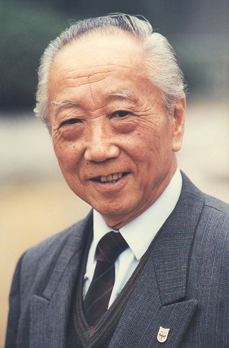
Eulogy: In Memory of Dr. Zhongbi Wu
by: Dongfeng Tan, MD (November 16, 2007)
It is with great sadness that I inform the pathology community of the death of Dr.
Zhongbi Wu, on November 8, 2007. Born in Anhui, China, in 1919, he graduated in 1945
from the National Tongji Medical College (TMC), a renowned medical school founded
by Dr. Erich Paulun in Shanghai a century ago. Dr. Wu stayed as a junior faculty in TMC,
where he and Dr. Shuzu Yang founded the first pathology department in China in 1946.
In the late 1950s, he went to Germany to learn to use the newly developed electron
microscope. Subsequently, he specialized in ultrastructural pathology. Dr. Wu, as the
founding Chief of the Department of Ultrastructural Pathology at TMC, was considered a
world authority on ultrastructural pathology. His research had focused on the
carcinogenesis of hepatocellular carcinoma. He authored over 200 publications, edited
14 pathology textbooks, held numerous research grants, and was an invited speaker at
scientific meetings around the world. Of note, his pioneering study examining the
preserved organ systems from the mummies dating to the Western Han Dynasty (i.e.,
2100 years ago) by modern pathology techniques provided profound insights into the
lives, health and deaths of individuals long gone. His work resulted in significant
contributions to both paleopathology and anthropology.
Dr. Wu’s academic activities were disrupted during the Culture Revolution from 1966 to
1976. He, the editor-in-chief, and his team composed and published the Textbook of
Pathology in early 1978, which provided the most updated pathology material for the
freshmen of eighty-seven medical schools in China. His book, now in the sixth edition,
by: Dongfeng Tan, MD (November 16, 2007)
It is with great sadness that I inform the pathology community of the death of Dr.
Zhongbi Wu, on November 8, 2007. Born in Anhui, China, in 1919, he graduated in 1945
from the National Tongji Medical College (TMC), a renowned medical school founded
by Dr. Erich Paulun in Shanghai a century ago. Dr. Wu stayed as a junior faculty in TMC,
where he and Dr. Shuzu Yang founded the first pathology department in China in 1946.
In the late 1950s, he went to Germany to learn to use the newly developed electron
microscope. Subsequently, he specialized in ultrastructural pathology. Dr. Wu, as the
founding Chief of the Department of Ultrastructural Pathology at TMC, was considered a
world authority on ultrastructural pathology. His research had focused on the
carcinogenesis of hepatocellular carcinoma. He authored over 200 publications, edited
14 pathology textbooks, held numerous research grants, and was an invited speaker at
scientific meetings around the world. Of note, his pioneering study examining the
preserved organ systems from the mummies dating to the Western Han Dynasty (i.e.,
2100 years ago) by modern pathology techniques provided profound insights into the
lives, health and deaths of individuals long gone. His work resulted in significant
contributions to both paleopathology and anthropology.
Dr. Wu’s academic activities were disrupted during the Culture Revolution from 1966 to
1976. He, the editor-in-chief, and his team composed and published the Textbook of
Pathology in early 1978, which provided the most updated pathology material for the
freshmen of eighty-seven medical schools in China. His book, now in the sixth edition,
remains the standard pathology textbook in China. Dr. Wu was the founding director (1983-1989) of the Paul Ehrlich Research
Institute of Experimental Medicine. He became a member of the privileged German Academy of Natural Science in 1988, and he
served as Councilor of the academy and was a member of various medical committees as well as many editorial boards of peer-
reviewed journals. He was the recipient of many awards and honors, including honorary doctorates from the world-renowned
institutions, such as Heidelberg University and Berlin Humboldt University. In 2002, Dr. Wu was awarded the President
Distinguished Service Cross with Star, the highest German decoration ever presented to a non-German citizen.
Dr. Wu had an unwavering commitment and devotion to pathology and medicine. He remained an active and full-time Professor in
the Department of Pathology at Tongji Medical College until the spring of this year, when he was diagnosed with advanced colorectal
cancer.
I am sure many of us have fond memories of him. I particularly remember the first week of the pathology course in my second year of
medical school in 1979, when Dr. Wu dazzled us with his illuminating lectures, witty humor, and great inspiration—the best possible
introduction to pathology for our young minds. So many students, including myself, have been inspired by his role model and gone
on to pursue pathology as a lifelong career. Many well-established pathologists, such as Drs. Ruan Youbing, Zhou Xiaojun, Xu
Yuhui, Xia Yifang, Wang Huijun, Shen Shiliang and Hu Zhongyi, just to name a few, have benefited further from his mentorship, as
Dr. Wu trained the next generations of pathologists, both in China and abroad. I regard myself as privileged to have worked with him
as one of his graduate students (1983-1987). Despite a busy schedule and the often inconvenient timing, Dr. Wu always found the
time to be helpful, nurturing, collegial, and informative. I speak on behalf of his pupils in expressing our profound sadness and
sense of loss at the passing of one of our most distinguished mentors. He was a rare combination of the consummate gentleman,
insightful scholar, outstanding pathologist, inspiring educator, effective administrator, and treasured friend. His personal kindness
and friendship was something that has touched so many people. The fact that 4200 people attended his funeral service held on Nov.
12, 2007, in the University Stadium, Wuhan, China, is a testimony to his greatness. The world is certainly a much lonelier place for
his passing.
An amiable gentleman, Dr. Wu loved traveling, literature, and history. He has inspired family, friends, and colleagues in so many
ways that he will live indefinitely in our hearts. He will be profoundly missed by everyone. Dr. Wu is survived by his wife, two
daughters, and two grandchildren.
Dongfeng Tan, MD, Department of Pathology and Laboratory Medicine, MD Anderson Cancer Center, 1515 Holcombe Blvd, Houston, TX 77030, U.S.A.
Tel: 713-745-4977, Fax:713-745-1105, Email:dongfengtan@mdanderson.org
Institute of Experimental Medicine. He became a member of the privileged German Academy of Natural Science in 1988, and he
served as Councilor of the academy and was a member of various medical committees as well as many editorial boards of peer-
reviewed journals. He was the recipient of many awards and honors, including honorary doctorates from the world-renowned
institutions, such as Heidelberg University and Berlin Humboldt University. In 2002, Dr. Wu was awarded the President
Distinguished Service Cross with Star, the highest German decoration ever presented to a non-German citizen.
Dr. Wu had an unwavering commitment and devotion to pathology and medicine. He remained an active and full-time Professor in
the Department of Pathology at Tongji Medical College until the spring of this year, when he was diagnosed with advanced colorectal
cancer.
I am sure many of us have fond memories of him. I particularly remember the first week of the pathology course in my second year of
medical school in 1979, when Dr. Wu dazzled us with his illuminating lectures, witty humor, and great inspiration—the best possible
introduction to pathology for our young minds. So many students, including myself, have been inspired by his role model and gone
on to pursue pathology as a lifelong career. Many well-established pathologists, such as Drs. Ruan Youbing, Zhou Xiaojun, Xu
Yuhui, Xia Yifang, Wang Huijun, Shen Shiliang and Hu Zhongyi, just to name a few, have benefited further from his mentorship, as
Dr. Wu trained the next generations of pathologists, both in China and abroad. I regard myself as privileged to have worked with him
as one of his graduate students (1983-1987). Despite a busy schedule and the often inconvenient timing, Dr. Wu always found the
time to be helpful, nurturing, collegial, and informative. I speak on behalf of his pupils in expressing our profound sadness and
sense of loss at the passing of one of our most distinguished mentors. He was a rare combination of the consummate gentleman,
insightful scholar, outstanding pathologist, inspiring educator, effective administrator, and treasured friend. His personal kindness
and friendship was something that has touched so many people. The fact that 4200 people attended his funeral service held on Nov.
12, 2007, in the University Stadium, Wuhan, China, is a testimony to his greatness. The world is certainly a much lonelier place for
his passing.
An amiable gentleman, Dr. Wu loved traveling, literature, and history. He has inspired family, friends, and colleagues in so many
ways that he will live indefinitely in our hearts. He will be profoundly missed by everyone. Dr. Wu is survived by his wife, two
daughters, and two grandchildren.
Dongfeng Tan, MD, Department of Pathology and Laboratory Medicine, MD Anderson Cancer Center, 1515 Holcombe Blvd, Houston, TX 77030, U.S.A.
Tel: 713-745-4977, Fax:713-745-1105, Email:dongfengtan@mdanderson.org
 | |  | |  | |  | |  | |  |
